Tag: technical analysis

  • best technical analysis tools in trading app

    best technical analysis tools in trading app

    No content returned. Gemini error: You exceeded your current quota, please check your plan and billing details. For more information on this error, head to: https://ai.google.dev/gemini-api/docs/rate-limits. To monitor your current usage, head to: https://ai.dev/usage?tab=rate-limit.
    * Quota exceeded for metric: generativelanguage.googleapis.com/generate_content_free_tier_requests, limit: 200
    Please retry in 19.705987323s.

  • intraday trading

    intraday trading

    No content returned. Gemini error: You exceeded your current quota, please check your plan and billing details. For more information on this error, head to: https://ai.google.dev/gemini-api/docs/rate-limits. To monitor your current usage, head to: https://ai.dev/usage?tab=rate-limit.
    * Quota exceeded for metric: generativelanguage.googleapis.com/generate_content_free_tier_requests, limit: 200
    Please retry in 38.532451194s.

  • best technical analysis tools in trading app

    best technical analysis tools in trading app

    No content returned. Gemini error: You exceeded your current quota, please check your plan and billing details. For more information on this error, head to: https://ai.google.dev/gemini-api/docs/rate-limits. To monitor your current usage, head to: https://ai.dev/usage?tab=rate-limit.
    * Quota exceeded for metric: generativelanguage.googleapis.com/generate_content_free_tier_requests, limit: 200
    Please retry in 26.315588497s.

  • intraday trading

    intraday trading

    No content returned. Gemini error: You exceeded your current quota, please check your plan and billing details. For more information on this error, head to: https://ai.google.dev/gemini-api/docs/rate-limits. To monitor your current usage, head to: https://ai.dev/usage?tab=rate-limit.
    * Quota exceeded for metric: generativelanguage.googleapis.com/generate_content_free_tier_requests, limit: 200
    Please retry in 48.238739844s.

  • best technical analysis tools in trading app

    best technical analysis tools in trading app

    No content returned. Gemini error: You exceeded your current quota, please check your plan and billing details. For more information on this error, head to: https://ai.google.dev/gemini-api/docs/rate-limits. To monitor your current usage, head to: https://ai.dev/usage?tab=rate-limit.
    * Quota exceeded for metric: generativelanguage.googleapis.com/generate_content_free_tier_requests, limit: 200
    Please retry in 37.028652622s.

  • intraday trading

    intraday trading

    No content returned. Gemini error: You exceeded your current quota, please check your plan and billing details. For more information on this error, head to: https://ai.google.dev/gemini-api/docs/rate-limits. To monitor your current usage, head to: https://ai.dev/usage?tab=rate-limit.
    * Quota exceeded for metric: generativelanguage.googleapis.com/generate_content_free_tier_requests, limit: 200
    Please retry in 37.336804038s.

  • powerful trading app

    powerful trading app

    No content returned. Gemini error: You exceeded your current quota, please check your plan and billing details. For more information on this error, head to: https://ai.google.dev/gemini-api/docs/rate-limits. To monitor your current usage, head to: https://ai.dev/usage?tab=rate-limit.
    * Quota exceeded for metric: generativelanguage.googleapis.com/generate_content_free_tier_requests, limit: 200
    Please retry in 22.732708874s.

  • Supercharge Your Trading: Best Technical Analysis Tools in Your App

    Supercharge Your Trading: Best Technical Analysis Tools in Your App

    Unlock trading success with the best technical analysis tools in trading app! This guide explores essential indicators, charts, & strategies for Indian investor

    Unlock trading success with the best technical analysis tools in trading app! This guide explores essential indicators, charts, & strategies for Indian investors on NSE & BSE. Enhance your SIPs & ELSS investments today!

    Supercharge Your Trading: Best Technical Analysis Tools in Your App

    Introduction: Decoding the Market with Technical Analysis

    In the dynamic world of the Indian stock market, successful trading hinges on more than just gut feeling. Technical analysis provides a structured framework for interpreting market data and predicting future price movements. Whether you’re trading on the National Stock Exchange (NSE) or the Bombay Stock Exchange (BSE), mastering technical analysis can significantly improve your investment outcomes, particularly when deploying strategies for your mutual funds, including Systematic Investment Plans (SIPs) and Equity Linked Savings Schemes (ELSS).

    This article will delve into the essential technical analysis tools available in modern trading apps, empowering you to make informed decisions and navigate the complexities of the Indian equity markets.

    Why Use Technical Analysis in Your Trading App?

    Trading apps have revolutionized the way Indian investors participate in the stock market. They offer instant access to real-time data, charting tools, and order execution capabilities, all from the convenience of your smartphone. Incorporating technical analysis into your trading strategy using these apps provides several benefits:

    • Identify Trends: Technical indicators help you spot emerging trends and capitalize on them early. Whether it’s a bullish upswing or a bearish decline, identifying the trend is crucial for profitable trading.
    • Determine Entry and Exit Points: By analyzing charts and indicators, you can pinpoint optimal entry and exit points for your trades, maximizing potential gains and minimizing losses.
    • Manage Risk: Technical analysis allows you to set stop-loss orders and target profit levels based on calculated support and resistance levels, effectively managing your risk exposure.
    • Improve Timing: Understanding chart patterns and indicator signals can help you time your trades more accurately, increasing your chances of success.
    • Enhance Investment Decisions: Whether you are investing in direct equities or using the app to manage your mutual fund portfolios, including investments in tax-saving ELSS funds or retirement planning via NPS, technical analysis can assist you in making better informed buy, sell, and hold decisions.

    Essential Technical Analysis Tools in Trading Apps

    Let’s explore some of the most popular and effective technical analysis tools readily available in most Indian trading apps:

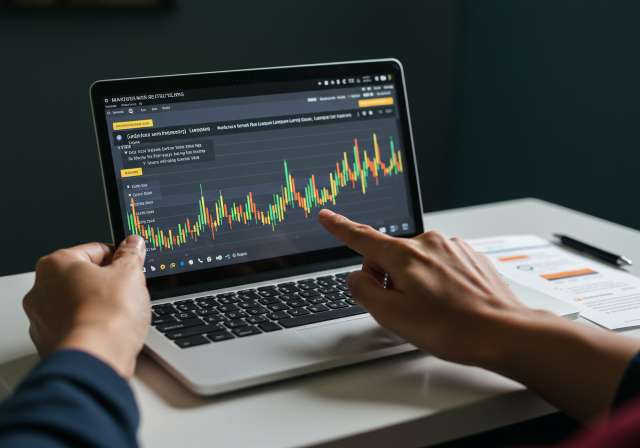
    1. Chart Types: Visualizing Price Action

    Different chart types offer varying perspectives on price data. Understanding them is fundamental. Some common chart types include:

    • Line Charts: The simplest chart, connecting closing prices over a period. Useful for identifying broad trends.
    • Bar Charts: Display the open, high, low, and close prices for a given period. Provide more detailed information than line charts.
    • Candlestick Charts: Similar to bar charts but use colored “candles” to represent price movements. Green or white candles indicate upward movement (closing price higher than opening price), while red or black candles indicate downward movement. Candlestick patterns are particularly useful for identifying potential reversals. Popular candlestick patterns include the Hammer, Hanging Man, Engulfing Pattern, and Doji.

    2. Trendlines: Identifying Market Direction

    Trendlines are lines drawn on a chart to connect a series of highs or lows. They help identify the direction of the trend.

    • Uptrend Line: Drawn connecting a series of higher lows, indicating an upward trend.
    • Downtrend Line: Drawn connecting a series of lower highs, indicating a downward trend.
    • Horizontal Lines: Used to identify support and resistance levels.

    3. Moving Averages (MAs): Smoothing Price Data

    Moving Averages smooth out price data by calculating the average price over a specified period. They help to filter out noise and identify the underlying trend.

    • Simple Moving Average (SMA): Calculates the average price over a specific number of periods (e.g., 50-day SMA, 200-day SMA).
    • Exponential Moving Average (EMA): Gives more weight to recent prices, making it more responsive to changes in the market.
    • Using MAs: When a shorter-term MA crosses above a longer-term MA, it can be a bullish signal (a “golden cross”). Conversely, when a shorter-term MA crosses below a longer-term MA, it can be a bearish signal (a “death cross”).

    4. Relative Strength Index (RSI): Gauging Momentum

    The Relative Strength Index (RSI) is a momentum oscillator that measures the magnitude of recent price changes to evaluate overbought or oversold conditions in the price of a stock or asset. It ranges from 0 to 100.

    • RSI > 70: Typically indicates an overbought condition, suggesting a potential price reversal to the downside.
    • RSI < 30: Typically indicates an oversold condition, suggesting a potential price reversal to the upside.
    • Divergence: When the price makes a new high but the RSI fails to make a new high (or vice versa), it can signal a potential trend reversal.

    5. Moving Average Convergence Divergence (MACD): Spotting Trend Changes

    The Moving Average Convergence Divergence (MACD) is a trend-following momentum indicator that shows the relationship between two moving averages of a security’s price. It consists of the MACD line, the signal line, and a histogram.

    • MACD Line: Calculated by subtracting the 26-day EMA from the 12-day EMA.
    • Signal Line: A 9-day EMA of the MACD line.
    • Histogram: Represents the difference between the MACD line and the signal line.
    • Crossovers: When the MACD line crosses above the signal line, it can be a bullish signal. When the MACD line crosses below the signal line, it can be a bearish signal.
    • Divergence: Similar to the RSI, divergence between the MACD and the price can signal potential trend reversals.

    6. Fibonacci Retracement: Identifying Support and Resistance Levels

    Fibonacci retracement levels are horizontal lines that indicate potential support and resistance levels based on Fibonacci ratios (23.6%, 38.2%, 50%, 61.8%, and 100%). They are drawn by identifying a significant high and low point on a chart and then dividing the vertical distance between them by the Fibonacci ratios.

    • Using Fibonacci Levels: Traders often look for price retracements to these levels, expecting them to act as potential support or resistance. For instance, if a stock is in an uptrend, a retracement to the 38.2% or 50% Fibonacci level might be a good entry point.

    7. Volume: Confirming Price Movements

    Volume represents the number of shares traded in a given period. It’s a crucial indicator for confirming the strength of price movements.

    • Rising Volume: Confirms the strength of a trend. For example, a price increase accompanied by rising volume suggests strong buying pressure.
    • Falling Volume: May indicate a weakening trend. A price increase accompanied by falling volume might suggest a lack of conviction in the uptrend.
    • Volume Spikes: Can signal potential reversals or breakouts.

    Putting It All Together: A Practical Example

    Let’s say you’re analyzing the chart of a company listed on the NSE using your trading app. You notice that the price has been trending upwards. You could use the following technical analysis tools to refine your trading strategy:

    1. Identify the Trend: Draw an uptrend line connecting the higher lows on the chart.
    2. Confirm with Moving Averages: Observe that the 50-day EMA is above the 200-day EMA, confirming the bullish trend.
    3. Check Momentum with RSI: The RSI is currently at 65, indicating that the stock is not yet overbought.
    4. Find Entry Points with Fibonacci: Use Fibonacci retracement levels to identify potential support levels where you might consider entering a long position. If the price retraces to the 38.2% Fibonacci level, and volume shows increased buying pressure, it could signal a solid entry point.
    5. Set Stop-Loss Orders: Place a stop-loss order slightly below the recent low or a key support level to limit potential losses.

    Choosing the Right Trading App

    While most trading apps offer basic technical analysis tools, some provide more advanced features and customization options. When selecting a trading app, consider the following factors:

    • Range of Indicators: Ensure the app offers a wide variety of technical indicators and charting tools.
    • Customization Options: Look for apps that allow you to customize chart settings, indicator parameters, and drawing tools.
    • User Interface: Choose an app with a user-friendly interface that is easy to navigate and understand.
    • Real-Time Data: Ensure the app provides real-time market data from the NSE and BSE.
    • Brokerage Charges: Consider the brokerage fees and other charges associated with the app.
    • Reliability and Security: Opt for an app from a reputable brokerage with a strong track record of reliability and security.

    Beyond Technical Analysis: Combining with Fundamental Analysis

    While technical analysis is a powerful tool, it’s important to remember that it’s just one piece of the puzzle. For a more comprehensive investment strategy, consider combining technical analysis with fundamental analysis, which involves evaluating the financial health and intrinsic value of a company. Fundamental analysis often involves studying the company’s balance sheet, income statement, cash flow statement, and conducting SWOT (Strengths, Weaknesses, Opportunities, Threats) analysis.

    For example, you might use fundamental analysis to identify companies with strong growth potential and then use technical analysis to time your entry and exit points. This integrated approach can significantly improve your investment outcomes and help you achieve your financial goals, whether you’re investing in the equity markets directly, focusing on SIPs in mutual funds, or leveraging tax-saving instruments like ELSS, PPF, and NPS for long-term financial security.

    Ultimately, finding the best technical analysis tools in trading app will come down to personal preference, learning what works best for your own investment style, and what your own comfort levels are.

    Conclusion: Empowering Your Trading Journey

    Technical analysis is an indispensable skill for any Indian investor looking to navigate the complexities of the stock market. By mastering the essential tools and techniques discussed in this article and utilizing the features available in your trading app, you can gain a significant edge in your trading endeavors. Remember to continuously learn, adapt your strategies based on market conditions, and always manage your risk effectively. Happy trading!

  • Intraday Trading: A Beginner’s Guide to Day Trading in India

    Intraday Trading: A Beginner’s Guide to Day Trading in India

    The Indian stock market is regulated by the Securities and Exchange Board of India (SEBI), which sets rules and guidelines for trading activities, including intraday trading. It’s important for intraday traders to be aware of and comply with these regulations.

    Key Regulations

    • Broker Registration: Ensure that your broker is registered with SEBI and is a member of the NSE and BSE.
    • Margin Requirements: Be aware of the margin requirements for intraday trading. SEBI sets minimum margin requirements to reduce the risk of excessive leverage.
    • Insider Trading Regulations: Avoid trading on inside information, which is illegal and can result in severe penalties.
    • Reporting Requirements: Keep accurate records of your trading activities and report your income to the Income Tax Department.
    • Investor Grievance Redressal: Familiarize yourself with the investor grievance redressal mechanisms available through SEBI and the stock exchanges.

    Building a Successful Intraday Trading Plan

    A well-defined trading plan is essential for success in intraday trading. Your plan should outline your trading goals, strategies, risk management rules, and record-keeping procedures.

    Elements of a Trading Plan

    • Trading Goals: Define your financial goals for intraday trading. How much profit do you want to generate? What is your risk tolerance?
    • Trading Strategies: Identify the trading strategies that you will use. Will you focus on trend following, breakout trading, or reversal trading?
    • Risk Management Rules: Establish clear risk management rules, including stop-loss orders, position sizing, and risk-reward ratios.
    • Stock Selection Criteria: Define the criteria you will use to select stocks for intraday trading. Consider factors such as volatility, liquidity, and news flow.
    • Entry and Exit Rules: Develop specific rules for entering and exiting trades. When will you buy or sell a stock? What are your profit targets and stop-loss levels?
    • Record Keeping: Keep accurate records of all your trades, including entry and exit prices, position sizes, and profits or losses. This will help you track your performance and identify areas for improvement.
    • Review and Adjustment: Regularly review your trading plan and make adjustments as needed based on your performance and market conditions. The stock market is dynamic, and your plan should evolve over time.

    Alternatives to Intraday Trading: Exploring Other Investment Options in India

    While intraday trading can be appealing due to its potential for quick profits, it’s important to remember that it’s a high-risk, high-reward activity. If you’re risk-averse or prefer a more passive approach to investing, there are several other options available in the Indian market.

    Popular Investment Alternatives

    • Mutual Funds: Mutual funds are professionally managed investment schemes that pool money from multiple investors to invest in a diversified portfolio of stocks, bonds, or other assets. Systematic Investment Plans (SIPs) allow you to invest a fixed amount regularly, making them a convenient and disciplined way to build wealth over time.
    • Public Provident Fund (PPF): PPF is a government-backed savings scheme that offers attractive interest rates and tax benefits. It’s a safe and reliable option for long-term savings.
    • National Pension System (NPS): NPS is a retirement savings scheme that allows you to invest in a mix of stocks, bonds, and government securities. It offers tax benefits and is a good option for building a retirement corpus.
    • Fixed Deposits (FDs): FDs are a low-risk investment option that offers a fixed rate of interest for a specified period. They are a good option for conservative investors who prioritize capital preservation.
    • Real Estate: Investing in real estate can provide long-term capital appreciation and rental income. However, it’s a relatively illiquid investment and requires a significant upfront investment.

    Before engaging in intraday trading or any other investment activity, it’s essential to conduct thorough research, understand the risks involved, and seek advice from a qualified financial advisor. Remember that investing in the stock market involves risk, and you could lose money.

    Demystifying intraday trading: Learn strategies, risks, and best practices for navigating the Indian stock market. Maximize your potential with expert tips and insights for success.

    Intraday Trading: A Beginner’s Guide to Day Trading in India

    Understanding the Fundamentals of Intraday Trading

    Intraday trading, often referred to as day trading, involves buying and selling financial instruments, such as stocks, within the same trading day. The primary goal is to profit from short-term price fluctuations. Unlike long-term investing, positions are typically closed out before the end of the trading session, eliminating the risk of overnight market gaps. In the Indian context, this activity primarily takes place on exchanges like the National Stock Exchange (NSE) and the Bombay Stock Exchange (BSE).

    For example, a trader might buy shares of Reliance Industries at ₹2,500 in the morning, anticipating a price rise, and sell them at ₹2,520 in the afternoon to book a profit of ₹20 per share. Conversely, they might short-sell shares of Tata Consultancy Services (TCS) if they predict a price decline and then buy them back later at a lower price.

    Key Concepts for Aspiring Day Traders

    • Leverage: Intraday traders often use leverage provided by brokers to amplify their trading positions. While leverage can increase potential profits, it also significantly magnifies losses. It’s crucial to understand and manage leverage effectively.
    • Volatility: Volatility is the degree of price fluctuation in a financial instrument. Intraday traders thrive on volatility, as it provides opportunities for quick profits. However, high volatility also increases the risk of losses.
    • Liquidity: Liquidity refers to the ease with which an asset can be bought or sold without significantly affecting its price. High liquidity is essential for intraday trading, as it allows traders to enter and exit positions quickly.
    • Technical Analysis: Technical analysis involves studying historical price and volume data to identify patterns and trends that can be used to predict future price movements. Charts, indicators, and other technical tools are widely used by intraday traders.
    • Risk Management: Risk management is paramount in intraday trading. Setting stop-loss orders to limit potential losses and managing position sizes are crucial aspects of risk management.

    Essential Tools and Strategies for Successful Intraday Trading

    To succeed in intraday trading, you need more than just luck. A combination of the right tools, strategies, and discipline is essential.

    Tools of the Trade

    • Trading Platform: A reliable and user-friendly trading platform is crucial. Look for platforms that offer real-time data, advanced charting tools, and fast order execution. Several brokers in India offer specialized platforms tailored for intraday traders.
    • Data Feed: Access to real-time market data is essential for making informed trading decisions. Ensure that your trading platform provides a reliable and accurate data feed.
    • Charting Software: Charting software allows you to analyze price patterns and trends. Popular charting software includes tools like moving averages, RSI (Relative Strength Index), MACD (Moving Average Convergence Divergence), and Fibonacci retracements.
    • News and Economic Calendar: Staying updated on market news and economic events is crucial. Economic releases, such as GDP figures, inflation data, and interest rate announcements, can significantly impact market sentiment and price movements.

    Proven Intraday Trading Strategies

    • Trend Following: This strategy involves identifying and trading in the direction of the prevailing trend. Traders look for stocks that are consistently trending upwards or downwards and then enter positions accordingly.
    • Breakout Trading: Breakout trading involves identifying levels of resistance or support and then entering a position when the price breaks through these levels. The expectation is that the price will continue to move in the direction of the breakout.
    • Reversal Trading: Reversal trading involves identifying points where the price is likely to reverse direction. Traders look for signs of overbought or oversold conditions and then enter positions in anticipation of a reversal.
    • Scalping: Scalping is a high-frequency trading strategy that involves making small profits from numerous trades throughout the day. Scalpers typically hold positions for only a few minutes or even seconds.

    Risk Management: The Cornerstone of Intraday Trading Success

    Without proper risk management, intraday trading can be a quick path to financial ruin. It’s crucial to have a well-defined risk management plan and stick to it religiously.

    Key Risk Management Techniques

    • Stop-Loss Orders: A stop-loss order is an order to automatically sell a stock when it reaches a certain price. This helps to limit potential losses. Always use stop-loss orders when intraday trading.
    • Position Sizing: Position sizing refers to the number of shares you buy or sell in a particular trade. Avoid over-leveraging your account by trading with excessively large positions. A general rule of thumb is to risk no more than 1-2% of your trading capital on any single trade.
    • Risk-Reward Ratio: Always consider the risk-reward ratio before entering a trade. The risk-reward ratio is the potential profit divided by the potential loss. Aim for a risk-reward ratio of at least 1:2 or higher.
    • Avoid Overtrading: Overtrading can lead to impulsive decisions and increased losses. Stick to your trading plan and avoid trading simply for the sake of trading.
    • Emotional Control: Emotions can be detrimental to intraday trading. Avoid making trading decisions based on fear, greed, or anger. Stick to your plan and trade logically.

    Intraday Trading vs. Long-Term Investing: A Comparative Analysis

    Intraday trading and long-term investing are two fundamentally different approaches to participating in the stock market. While both aim to generate profits, they differ significantly in terms of time horizon, risk profile, and strategies employed.

    Key Differences

    • Time Horizon: Intraday trading focuses on short-term price movements within a single trading day, while long-term investing involves holding investments for months, years, or even decades.
    • Risk Profile: Intraday trading is significantly riskier than long-term investing due to the high leverage, volatility, and short time horizon involved.
    • Capital Requirements: Intraday trading often requires a smaller initial capital outlay due to the availability of leverage, while long-term investing typically requires a larger upfront investment.
    • Strategies: Intraday trading relies heavily on technical analysis and short-term trading strategies, while long-term investing focuses on fundamental analysis and long-term growth potential.
    • Time Commitment: Intraday trading requires a significant time commitment to monitor the market and execute trades, while long-term investing requires less active management.
    • Tax Implications: Profits from Intraday trading are generally taxed as speculative business income, while profits from long-term investing are typically taxed as capital gains. Understanding the tax implications is crucial, especially for those considering options like Equity Linked Savings Schemes (ELSS) for tax saving under Section 80C.

    Regulatory Considerations for Intraday Traders in India